


The Bookmarked Interview... with Fiona Cummins

Updated: Mar 4
Fiona Cummins is an award-winning crime thriller author whose 2017 debut novel Rattle, about a serial killer who targets victims with rare medical conditions, was the subject of a huge international auction.
A former journalist for titles including the The Mirror and a graduate of the Faber Academy, Fiona followed up Rattle's success with a sequel, The Collector, in 2018, and has gone on to write a series of brilliant, dramatic, tense and emotional books including The Neighbour, When I Was Ten, Into the Dark and her most recent novel Some of Us Are Liars, which is out in paperback this month.
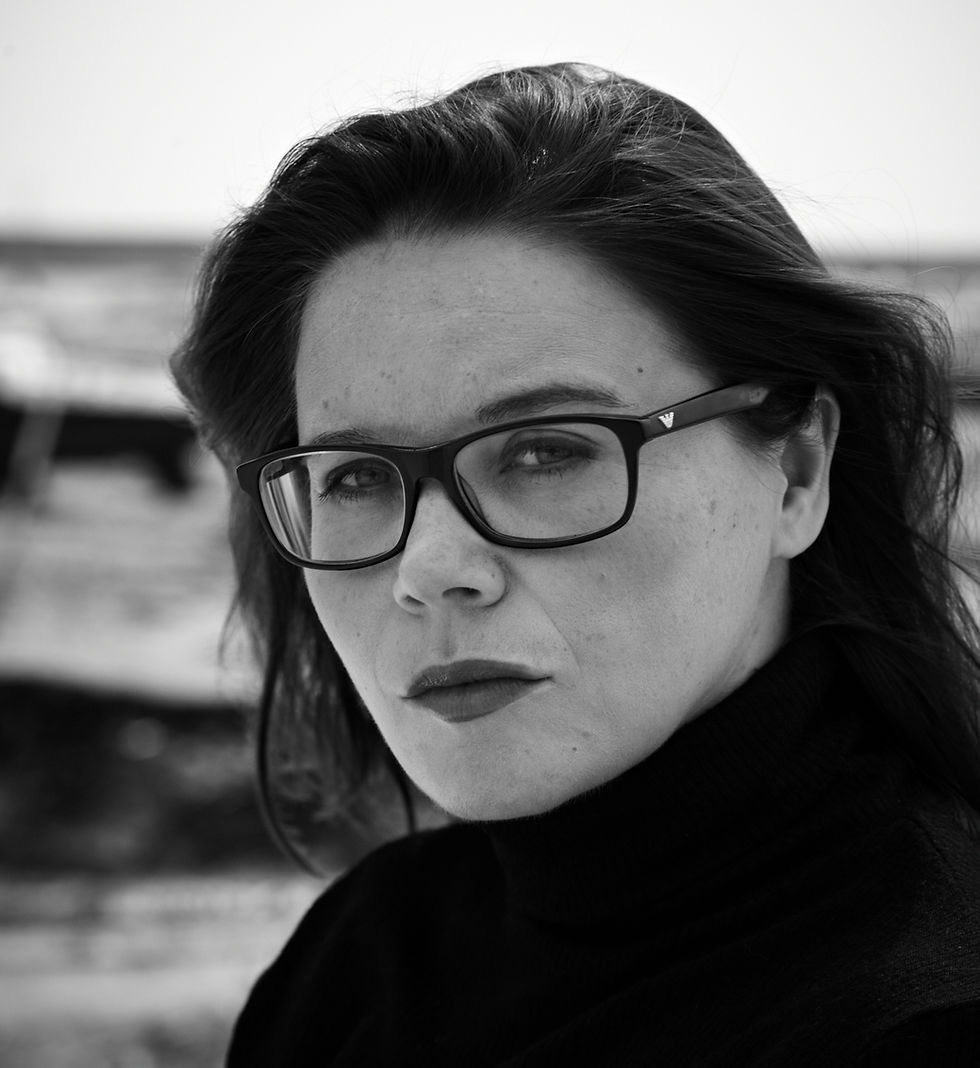
Fiona lives on the Essex coast and, below, she tells us how that part of the world influences her work as well as discussing the best piece of advice she's been given about writing, the biggest lessons she's learned since becoming a published author, and why families and family dynamics are often at the heart of her books.

You started your career as a journalist; was novel writing always something you were aiming for?
Not at all. I loved books growing up, and spent a lot of time in my local library, but it never occurred to me that it might be something I could do as a job − and get paid for it! But I enjoyed writing in my spare time, and when I was looking for a career that would offer me and my young family more flexibility, I decided to give it a serious go.
How did you get into journalism, and what help – if any – was your time in that role once you started writing Rattle?
I had always wanted to be a journalist − a teacher once told me I’d be good at it and the idea stuck − and so I was able to work towards that goal from a young age. By the time I was 15, I’d had my first byline in The Times, and had enjoyed work experience at my local free newspaper, the Yellow Advertiser, as well The Telegraph and Sky Television. When I finished university, the Yellow Advertiser offered me a job and, from there, I joined the Lancashire Evening Post, and then the Mirror’s graduate trainee scheme.
"I covered high-profile stories that were making headlines around the country, including rail disasters, murders, abductions and terrorist attacks."
Working as a journalist in the busy newsroom of a national newspaper meant I covered high-profile stories that were making headlines around the country, including rail disasters, murders, abductions and terrorist attacks. Although I would never use real-stories in my crime fiction, some of my experiences have inevitably coloured my writing.
You completed the Faber Academy novel writing course; what tools did that course give you that you didn’t already possess?
One of the most valuable pieces of advice I was given on the course was finish what you’ve started. It sounds obvious but when I began to write seriously, I found it difficult to keep going until I’d smoothed and perfected my first chapter.
During the course, I learned that everything can be rewritten once a draft has been finished, but you can’t edit a blank page. This freedom unlocked something in me. It also served as a warning to ignore the seductive lure of bright and shiny new ideas.
"You can’t edit a blank page."
It’s easy to be distracted at the coal-face of writing when you’re having a hard day and the words won’t come, so it’s important to interrogate the muscularity of your idea, and once you’ve settled on it, to keep going until the end.

Your 2017 debut, Rattle, has a brilliant, dark and unusual concept; can you pinpoint from where the spark of idea for that book came?
I’ve always had a tendency towards darkness, and a visit to London’s Hunterian Museum at the Royal College of Surgeons sparked the idea of a serial killer who collects victims with rare medical conditions. The museum is a fascinating study into the history of surgery and boasts the country’s largest display of human anatomy, although it is not for the faint-hearted.
Your seventh and most recent book, Some of Us Are Liars, comes out in paperback this month; what are the biggest lessons you’ve learned about being an author since Rattle?
A good question. I was so naive when I started! It’s not just about getting published, it’s about staying published. Being an author is not a linear career; there are rollercoaster highs and lows. You need to develop a thick skin and resilience.
I consider myself fortunate to earn enough to work as a full-time writer, but it’s a notoriously poorly paid profession unless you happen to become a household name. Many excellent books that deserve wide recognition fly under the radar and it takes time − often many years − to build a readership.
"It’s not just about getting published, it’s about staying published."
That said, the rewards can be thrilling. Three of my novels have been optioned for television. I’ve been a number one bestseller and published in several international territories. I’ve appeared at numerous crime festivals and on prize shortlists. Last year, I wrote a Quick Reads novella for literary charity The Reading Agency and their World Book Night campaign.

Your books have families at their heart, and often take in the point of view of children within those families; why do you think family dynamics make such gripping reading?
Because families are relatable. We’ve all experienced family dynamics in some shape or form, for good and ill. It’s not too much of a stretch for readers to put themselves in the position of my characters. And you’re right, children in peril is a recurring theme in my crime fiction. I have often wondered why, and I can only conclude that it’s my way of confronting my darkest fears − something awful happening to my own children.
"It’s my way of confronting my darkest fears."
You live by the sea in Essex, and that location features in some of your books; what is it about the area that you love, and that feels right as a location for your novels?
I have a deep love of the natural world, and the coastal seascape is an ever-changing source of inspiration, whether it’s a salt lagoon, the ebb and flow of the estuary, the wetland birds that wade through the mudflats, or a fishing boat dredging for cockles.
Even the quality of the light can differ from morning to afternoon, and I’m compelled to weave this into my novels, to help convey atmosphere, but mostly because I particularly enjoy this kind of nature writing. Regular readers will know that my books have also featured insects, dolphins, sea-birds, rabbits, lightning strikes and other extreme forms of weather.
![Above: A view across the Thames estuary on the coast of Essex, south east England. [Photo by Chris Dorney via Getty Images]](https://static.wixstatic.com/media/7087fe_96a257506bd747ed93781af648515819~mv2.jpg/v1/fill/w_980,h_653,al_c,q_85,usm_0.66_1.00_0.01,enc_avif,quality_auto/7087fe_96a257506bd747ed93781af648515819~mv2.jpg)
Detective Constable Saul Anguish is a recurring character across some of your books; why did you decide to bring him back, and is your approach to writing him different to writing other characters?
Saul Anguish first appeared in The Collector as a teenage boy who had been groomed by a serial killer, but when Waterstones bookseller Fiona Sharp suggested I bring him back as a detective, I couldn’t get the idea out of my mind, and he makes his debut as a police officer in Into The Dark.
"When Waterstones bookseller Fiona Sharp suggested I bring him back as a detective, I couldn’t get the idea out of my mind."
He is morally ambiguous and treads the narrow-way between light and dark; a man who does terrible things for the right reasons. I approach writing him as I do all my characters, which is, to say, I try and make them as rounded and nuanced as possible, with a back-story that informs their behaviour.
What's the first book you remember loving?
Crooked House by Agatha Christie. I was about 10, and I read it in the garden one summer, and the twist made me gasp out loud.

Which literary character would you most like to be?
Anne of Green Gables. She’s living my fantasy life.
What's your favourite movie/TV show adapted from a book?
The Silence of the Lambs by Thomas Harris, because Anthony Hopkins’ Hannibal Lecter is perfect.
Which book do you think should be adapted for the screen that, so far, hasn't been?
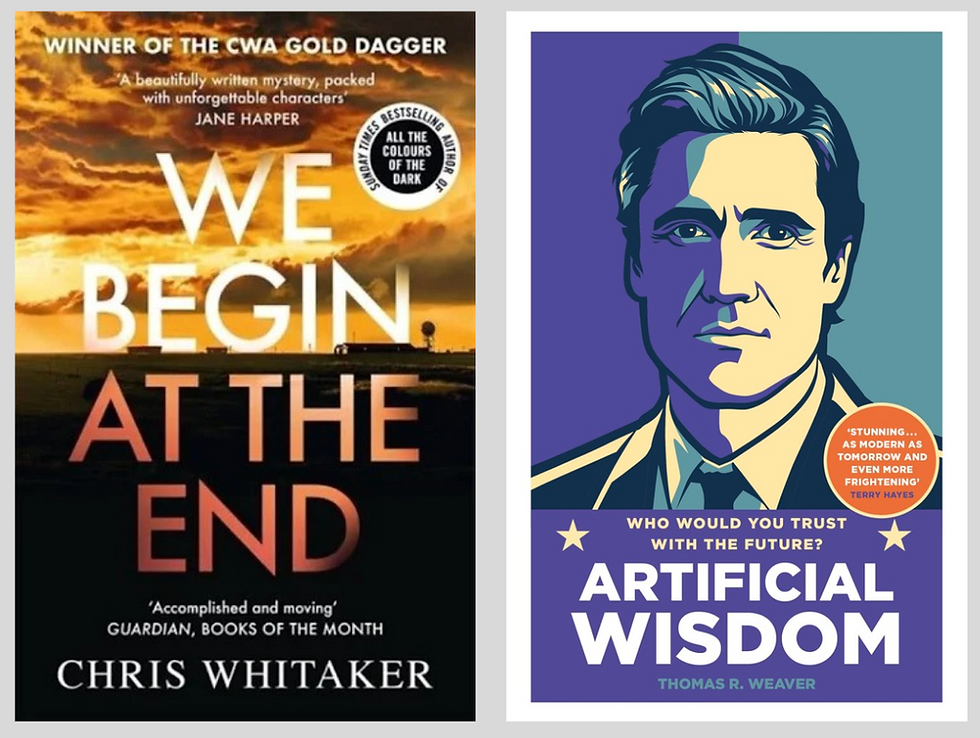
Ha! My own. If not, then We Begin At The End by Chris Whitaker.
Where's your favourite place to write?
In my writing shed at the end of my garden.
Describe your perfect writing set-up?
As above. My shed has a desk, some book shelves, a bed and I love to hear the birds sing while I’m working during the day, or the scrabble of badgers at night.
What was the last book you read, and would you recommend it?
I have literally just finished an unpublished crime novel by a writing friend of mine, and it’s brilliant, but I can’t say any more than that. More recently, I read and loved Artificial Wisdom by Thomas Weaver about a former US president and the world’s first political AI, who are battling it out to become the climate-stricken world’s global leader.
"I love to hear the birds sing while I’m working during the day, or the scrabble of badgers at night."
Which book is next on your reading list?
The Good Listener, by Holly Watt.
What are you working on next, and when might we see the next Fiona Cummins novel?
I’ve just finished a novel but I can’t say any more about it just yet except that I’m super-excited about it, and it will be out in February 2027.


xổ số plus dạo này mình thấy bạn bè nhắc hoài nên cũng ghé thử cho biết, chủ yếu xem họ trình bày ra sao chứ không có ngồi canh số. Vào trang thấy họ để tiêu đề theo kiểu nhóm ngày khá dễ lần, kiểu “XSMB Chủ Nhật” rồi có bài “XSMB ngày 19 07 2026” nhìn phát nhận ra liền nên khỏi phải kéo tìm mệt. Mình lướt xuống dưới thì thấy có khối “Đầu Lô tô Đuôi Lô tô” dạng bảng cột, chữ không bị nhồi quá nên đọc nhanh cũng ổn. Nói chung cảm giác bố cục gọn gàng, mấy phần dữ liệu tách thành từng box rõ ràng, nhất là cái bảng “Đầu Lô tô…
https://keonhacai5.com/ mình ghé thử cho biết thôi vì thấy bạn bè nói qua, kiểu vào xem giao diện có dễ dùng không. Ấn tượng đầu là trang chia khối nội dung khá rõ ràng, nhìn lướt là biết đâu là bài nhận định, đâu là phần kèo/tỉ lệ, không bị dồn chữ. Mình có kéo tới bài Girona vs Athletic Bilbao (03h00 ngày 05/11) thì thấy tiêu đề nổi bật, bên dưới chia đoạn ngắn nên đọc nhanh vẫn nắm được ý chính. Phần bảng kèo trình bày theo cột gọn gàng, không phải zoom hay căng mắt mới hiểu. Menu đặt ngay chỗ dễ thấy nên chuyển qua lại giữa bài này với bài khác cũng tiện, và khung…
ga vang tv dạo này mình thấy có người nhắc tới khi nói về các nền tảng giải trí trực tuyến nên cũng thử mở vào xem cách họ bố trí giao diện ra sao. Mình không đi sâu vào nội dung hay từng trò cụ thể, mà chủ yếu quan sát cách các chuyên mục được phân chia trên trang và cách thông tin hiển thị cho người dùng. Nhìn tổng thể thì các khu như thể thao, casino, game bài hay slot thường được sắp xếp theo từng nhóm khá rõ, hiển thị dạng khối và danh sách nên lướt qua cũng dễ theo dõi. Các bảng dữ liệu được trình bày dạng cột khá gọn, giúp quan…
tỷ lệ kèo bóng đá dạo này thấy bạn bè bàn nhiều quá nên mình tiện ghé thử một trang kiểu tổng hợp đánh giá nhà cái xem sao. Mình không rành mấy vụ này nên chỉ lướt cho biết, mà thấy giao diện khá thoáng, không bị rối mắt. Ngay đoạn “Chào Mừng Đến WEbsite Của Chúng Tôi” họ nói rõ là chuyên gom đánh giá nhà cái uy tín với cập nhật khuyến mãi, đọc vài dòng là nắm ý. Mình cũng để ý phần Featured Sections nhìn như mấy thẻ nội dung xếp gọn, mỗi thẻ có nút “Review Visit” nên bấm thử cũng tiện. Kéo xuống một chút là thấy các card bonus nằm thẳng hàng,…
tylekeotv.com mình thấy bạn bè nhắc qua nên tiện tay mở thử xem sao. Vừa vào là thấy trang làm kiểu chia khối rõ ràng, nhìn cái là biết chỗ nào là nội dung chính chỗ nào là phần phụ, nên lướt nhanh cũng không bị rối. Mình không đọc kỹ từng thứ, chỉ thử bấm qua vài mục cho biết thì thấy menu đặt khá dễ thấy, chuyển qua lại cũng mượt, không phải kéo lên kéo xuống tìm hoài. Font chữ với khoảng cách dòng vừa phải nên đọc không bị mỏi mắt, nhìn tổng thể khá “thoáng”. Nói chung cảm giác dùng nhẹ nhàng, không màu mè quá, và các khối nội dung được canh thẳng hàng…