


The Bookmarked interview... with Martin Edwards

Martin Edwards is a best-selling crime novelist and the winner of the Crime Writers' Association's Diamond Dagger award for 'sustained excellence in crime fiction writing'.
He was described by Richard Osman as "a true master of British crime writing", and is a member of The Detection Club, which was started in the 1930s by a group of leading detective novelists.
Martin has written scores of books across both fiction and non-fiction, and his three ongoing fiction series are set in different parts of the UK - Liverpool, Cumbria and 1930s London.

In this interview, Martin discusses his long career, his involvement in the The Detection Club, how he thinks crime novels have changed in the years since he started writing, and the books and authors that have inspired him along the way.
You trained as a solicitor; what first made you want to transition from practicing law to becoming a crime writer?
I’ve been a part-time consultant for some years since ceasing to be a partner so I could focus more on my writing, but the fact is, I wanted to be a crime writer from the time I discovered detective fiction. I wrote my first mysteries at the age of ten, and I still have these (thankfully unpublished!) stories.
"Being a crime writer was always my ambition and my absolute priority."
Becoming a solicitor was, at first, simply a way of earning a living so that I could write. Luckily, it turned out that I enjoyed the legal work, and I’ve been fortunate to have two careers I’ve enjoyed. But being a crime writer was always my ambition and my absolute priority.
Your first book was published in 1991 and, since then, you’ve written 24 novels, a series of short story collections, thirteen non-fiction books, as well as editing dozens of anthologies and collaborating on various other books; what do you think makes you so prolific?
Quite simply, I love writing. I’d write fiction even if nobody paid me to do so. And it’s just as well, since for a long time nobody did pay me.
The Harry Devlin series is set in Liverpool, the Rachel Savernake novels in 1930s London, and the Lake Mysteries in Cumbria; how important is place in your writing?
It’s hugely important, and I spend a lot of time on research of all kinds for the books, including spending plenty of time in the places I write about. It’s important to get a real sense of what the locations are like and what the people who live there are like. You can research on the internet, but it’s not quite the same. And I do a lot of other research as well, trying to get small details right. It takes up time, but it does make a difference.
"[Research] takes up time, but it does make a difference."
You’ve been a member of the Detection Club since 2008, and its president since 2015; what are its main aims and how important are such societies?
The Detection Club is simply a small dining club with an absolutely fascinating history. It’s very different from the CWA [Crime Writer's Association], which is a large professional body. Both have been very important in my life, because I enjoy the company of fellow crime writers. In fact, most of my friends are writers. I’ve benefited enormously from the support, kindness and friendship of other writers, and I like to do what I can to support others in turn.
How do you think crime writing and the novels the genre produces has changed since you began your writing career?
The genre always tends to reflect what is going on in society at the time. That was one of the key themes of my book The Golden Age of Murder, about the Detection Club in the 1930s. There are some parallels between present day society and what was happening in the '30s, which helps to explain why fiction in the style of the Golden Age has become enormously popular all over again.

When I was writing my Liverpool/Harry Devlin books in the '90s, critics paid no attention to the Golden Age elements. So, I’m fortunate to have hung on long enough for the type of stories I love writing to become more commercially attractive to publishers than used to be the case. That’s one change.
"AI will be significant, though it’s hard to predict exactly how it will impact."
Changes in the publishing industry, such as the rise of ebooks and audio, and the impact of digital publishing are also very significant. AI will also be significant, though it’s hard to predict exactly how it will impact.
You write three on-going series as well as stand-alone novels; do you approach them differently and is one more challenging than the other?
Yes, I approach them differently, and I approach each book in each series differently, to some extent. I like variety and I think the big risk with a series is that it can become formulaic. So, that’s something I am very keen to avoid.
My aim is that each book shall be better than the last, though of course, that’s not so easy to achieve in practice. My Rachel Savernake books are extremely intricate, but I love writing them and, of course, the more you write, the more you tend to gain in confidence and expertise.

In 2020 you received the CWA’s Diamond Dagger for ‘sustained excellence in crime fiction'; what did that award mean to you?
This is an award voted on by fellow crime writers, and many legendary writers have received it. It was a wonderful, and I must say, unexpected honour. I still can’t quite believe it. So, I feel even more motivated to keep writing books of the highest standard of which I’m capable.
What advice would you give to someone looking to write or publish their first crime novel?
Write a book you believe in. And don’t give up when you experience setbacks. I’ve always written books I believed in, even when they weren’t particularly successful and, in the long run, this has worked well for me. But you do have to have resilience as well as belief, and a reasonable amount of ability.
"You do have to have resilience as well as belief, and a reasonable amount of ability."
What's the first book you remember loving, and why?
And Then There Were None, because it’s a brilliant combination of whodunit and suspense novel.
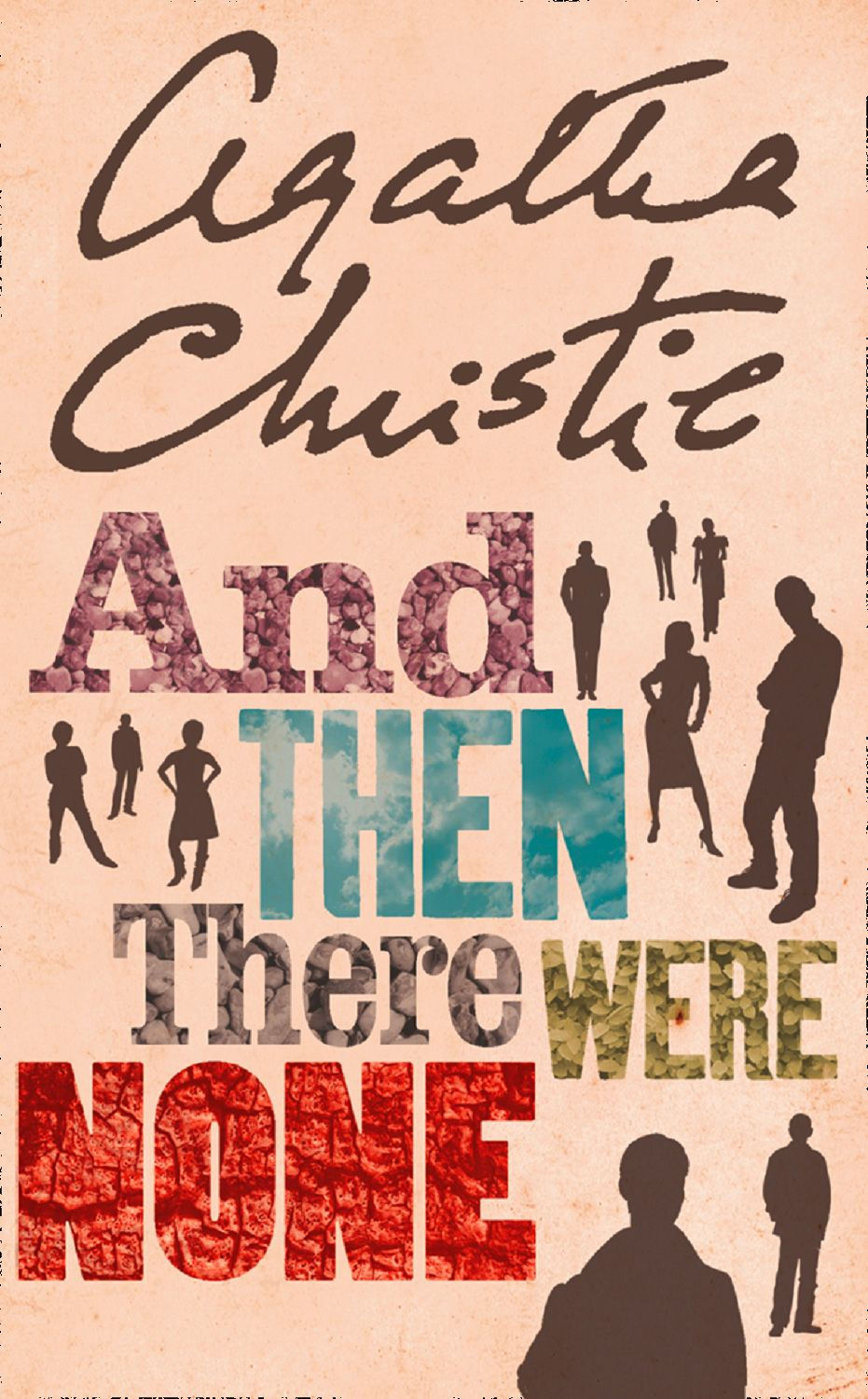
Which literary character would you most like to be, and why?
I’m quite content being myself, even with all my faults and limitations. I’ve never wanted to be anyone else.
What's your favourite movie/TV show adapted from a book, and why?
Vertigo, which I think is a great combination of mystery and character study.

Which book do you think should be adapted for the screen that, so far, hasn't been?
One of mine! Other than that, there are plenty of possibilities. Maybe Lonely Magdalen by Henry Wade.
Are you a plotter or a pantser?
I have different approaches to different books, but in most cases I know the ending from the start, even if I don’t know how I’ll reach it.
Where's your favourite place to write?
At home, on my PC.
Describe your perfect writing set-up?
Somewhere without external interruptions.
What was the last book you read, and would you recommend it?
D. M. Devine’s The Fifth Cord, and yes, it’s a great serial killer whodunit. Very clever.

Which book is next on your reading list?
Flann O’Brien’s At Swim Two Birds.
You can have dinner with four other authors, living or dead, who would you choose and why?
Reginald Hill, PD James, Mick Herron, and Ann Cleeves.
What book do you think you should have read, but still haven't?
There are hundreds of possibilities, but perhaps Our Mutual Friend or Dombey and Son.
Which of your own books are you most proud of?
Fiction – Hemlock Bay. Non-fiction – The Life of Crime.

How do you organise your bookshelves?
By author, mostly. But I’m not very organised about it.
What are you working on currently, and when might we see the next Martin Edwards novel?
The sixth Rachel Savernake novel, Fever Island, which I loved writing and which I hope will publish in September.


Comments